Pages

Tuesday, December 25, 2007

Christmas Wishes...

...for peace and good will in the coming year!

May your heart's desire be one Christmas stocking away.

x/o Vince

Movie Review: Black Christmas (2006)

Note: Some sarcastic, semi-spoilers ahead…

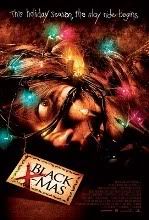
While I admit that I’m a sucker for slasher films and remakes, the idea of tackling a gem like Bob Clark’s 1974 understated slasher opus Black Christmas is a gutsy move for any director. But Glen Morgan, working from his updated treatment of the original Roy Moore-penned script, would have been better served by taking the Rob Zombie route with his upcoming Halloween redo by calling it a “re-imagining”. To call Morgan’s Black Christmas (or Black Xmas, if you want to follow the studio’s marketing abbreviation) a remake does both the original film and Morgan’s slick update little justice. While the story is essentially the same, Morgan’s update offers much more in the way of back story and motivation, while simultaneously asking its audience to suspend disbelief to a greater degree than the original. And, while Clark’s low-budget masterpiece of insinuating suspense essentially wrote the slasher film formula and established the benchmark for myriad slashers that followed, Morgan’s big-budget campy retelling effectively deconstructs the genre while posing as a viable, glossy post-modern entry.

Little Billy Lenz (played in flashbacks by a very creepy Cainan Wiebe) has suffered years of cruelty at the hands of an indifferent, abusive mother (played with gleeful amounts of wretched abandon by Karin Konaval). When his kindly father and only saving grace is struck down and buried beneath the front porch crawlspace by his mother and her lover, Billy is banished to the attic while his mother begins anew with her new husband and a new baby girl, named Agnes. Billy slips into a deep psychosis during lonely days and nights in the attic that stretch into long years of nurtured fixation that take root in the fertile soil of solitude, apathy, and incest. Christmas seems a particularly difficult time for poor Billy, so it’s no surprise when he eventually escapes captivity and dispatches with his mother and stepfather and disfigures his little sister/daughter. By the time the police arrive, poor little Agnes is minus an eyeball and Billy is calmly dunking his own twisted variation of homemade Christmas cookies in a glass of bloody milk.

Flash forward to present day as Billy’s childhood home now serves as dormitory to a generic gaggle of sorority sisters – Kelli, Heather, Dana, Melissa, Lauren, Megan, and Claire. As the snowbound girls and their kindly house mother prepare to open presents under their well-coiffed, Martha Stewart-variety Christmas tree, Billy (played as an adult by newcomer Robert Mann) prepares his own holiday homecoming with an escape from the sanitarium he’s been confined to. Before you can say “Santa Claus is coming to town”, Billy is back creeping between the walls and under the floorboards of his childhood abode and making menacing phone calls to the interloping coeds. But in a twist from the original film, the Yuletide body count actually begins before Billy’s arrival home, and viewers are left pondering the red herring presence of creepy coed Eve, a lothario boyfriend (who annoyingly refers to the sorority sisters several times as “You bitches”), and a former sorority alumna who shows up in the middle of a snowstorm claiming to be the estranged sister of one of the missing coeds. Of course there’s also one-eyed, inbred little sister Agnes whose whereabouts are largely speculated throughout the film ~ and it won’t take a genius to place bets on the psychotic sibling/spawn.

It will take a genius, however, to wade through the multiple inconsistencies in the updated script. Where Clark’s original played to realism with the extension of the action to outside the house and the logical involvement of the authorities, perhaps sacrificing a bit of the claustrophobia in the process, Morgan and company eschew external forces altogether with the confounding absence of law enforcement - despite the glaring facts that a) Billy kills at least two people in his escape from the sanitarium and would be logically expected by authorities to return to the scene of his former crimes and b) at one point in the film, one of the characters calls the police, reports finding an actual dead body and the missing status of several of her friends, but is unceremoniously told that there will be a two hour delay in sending anyone out because of the inclement weather(!).

Morgan and production partner James Wong (they worked together on the Final Destination franchise and episodes of TV’s The X-Files) assemble a competent enough cast of seasoned screamers – ranging from semi-recognizable up-and-comers like Katie Cassidy (When a Stranger Calls remake and The Lost), Mary Elizabeth Winstead (Final Destination 3 and the upcoming Grindhouse), Lacey Chabert (all grown-up from Party of Five), Michelle Trachtenberg (Buffy the Vampire Slayer), and Crystal Lowe (also from Final Destination 3, Snakes on a Plane, and the upcoming Wrong Turn 2), to Canadian unknowns Jessica Harmon, Leela Savasta, and Kathleen Kole. Thrown in for good measure are Andrea Martin (an original Black Christmas victim) now playing house mother Mrs. MacHenry in a clever nod to fans of the original film and peace offering to those furious over the idea of a remake in the first place, Morgan’s real-life wife, Kristen Cloke (Final Destination, and hubby’s Willard remake), in the significantly beefed up role of Claire’s sister (played as a father in the original film) who comes to pick up her little sis for Christmas break only to become reluctantly entangled in the murderous mayhem, and an oddly unrecognizable Oliver Hudson (of Dawson’s Creek fame and son of Goldie Hawn and brother of Kate Hudson) as one of the girl’s enigmatic boyfriends (in a bland variation of the red herring role played by Keir Dullea in the original). Where Clark’s original did a superior job of characterization, it’s difficult to differentiate between the ill-fated coeds here; with the exception of nerdy Eve, they all speak the same, have long hair (albeit of slightly varying colors), and have very little in the way of back story revealed to give them individual identities. To their credit, Morgan and Wong eschew the classic slasher formula here a bit by purposefully failing to pinpoint the Final Girl early on in the film, making it harder to figure out who will be off-ed next and who the ultimate survivor(s) (if any) will be.

Superior set decoration at the hands of Mark Lane lives up to the creepiness of the original, with holiday decorating staples (strands of twinkling lights, Christmas trees, candy canes, cookie cutters) put to more far more effective use here. Cinematographer Robert McLachlan does a good job with the shadowy interiors and wintry exteriors, while the late composer Shirley Walker creates an effectively jangle-y, pulse-pounding score to accompany the carnage. That said, it’s hard to judge film editor Chris Willingham’s work here - with purported interference by Dimension films with the final cut that reportedly continued up until the film’s release. There's already transatlantic Internet chatter about an alternate version of the film being shown in England. With illogical edits and annoying cutaways during action sequences, one can’t help but feel more than one set of hands on the film reel. If so, shame on the powers-that-be at Dimension for not relying on the vision of their director and his artistic and technical teams. With distracting moments of oddball pacing and trailer footage conspicuously absent from the final film, Dimension should take a page from competitor Lionsgate’s playbook on how to actually trust those you’ve entrusted to create a film. Let’s hope that they’ll be wise enough to offer Morgan an apology via the opportunity to present a director’s cut when Black Christmas hits DVD.

Genre fans will delight over the special make-up effects created by Rory Cutler and his team, who prove once again that latex and prosthetics trump CGI-generated special effects any day of the week. The kills are imaginative (at times over-the-top so), and whereas the violence in Bob Clark’s original was more implied, the blood and guts in this latest incarnation are explicit and unapologetically in-your-face. Suffice to say that eyeballs play a big part in this re-telling of Black Christmas, and there are bloody sockets and orbital entrails galore for gore hounds.

Morgan plays to the
Scream generation with his Black Christmas redux, which both works on a fun, campy level and fails at establishing the film as a serious contender in the slasher annals. As in Wes Craven’s Scream, there is self-referential black humor at work here – from nods to the original film with Martin’s casting, plastic bags as instruments of death, and an encore appearance by the infamous glass unicorn to the now-standard double-entendre dialogue that has populated the scripts of the post-modern slasher and an updated use of the telephone. Played as part homage, part sardonic roast, Morgan’s vision will undoubtedly bring the ire of Black Christmas loyalists while piquing the interest of diehard slasher fans. Conservative groups (like the tellingly titled Operation Just Say Merry Christmas) will reap the benefits of increased exposure for their puritanical agendas and log mucho air time publicly reviling the remake in an ugly bit of irony. Ultimately, it will be the ironists who win out if Black Christmas, take two, brings in cold, hard Christmas cash and generates enough box office action to warrant a direct-to-DVD sequel. For them, it will signify the delightful irony of crass holiday capitalism at its finest.

My advice? Approach the Black Christmas remake as a film in its own right versus a remake of a beloved slasher classic. Viewing the film in this manner will mean the difference between outright choking on your Christmas cookies versus merely needing a glass of milk to wash them down.

Monday, December 24, 2007

Classic Slasher Commentary: Black Christmas

*Note: Once in awhile, I re-discover a long-forgotten slasher gem. Recently, after exchanging some emails with a fellow slasher fan and reviewer known as BQueen in Internet circles, I realized that I had overlooked an important entry in the slasher genre. So, in what will periodically be an annotation on one of these forgotten jewels, I give you the first installment of Classic Slasher Commentary.

Long before Michael Myers donned a William Shatner mask or Jason Voorhees slipped on his hockey mask, there was Billy from a little Canadian slasher film called Black Christmas. Yet despite the fact that this effective Yuletide slasherfest actually pre-dated John Carpenter’s Halloween by four years, it would be the latter film that was widely credited as ushering in the golden era of slasher films of the 1980’s. Now, with a special-edition DVD and a slick remake, it’s time to debunk that myth and give Black Christmas the credit it rightfully deserves as the first modern slasher.
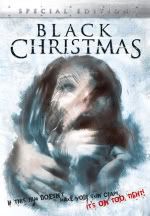
Although Black Christmas was released in US theaters on December 20, 1974 amidst the type of public outcry from conservative groups that usually bodes well for box office success, the film tanked domestically; it wouldn’t be until subsequent late-night cable TV runs that American audiences would get their first nibble of this tasty holiday treat. Boasting a nifty tagline (If this film doesn’t make your skin crawl, it’s on too tight.) and what would become the formulaic plot of the cavalcade of slashers that followed, Black Christmas told the simple and chilling tale of sorority sisters menaced by an obscene caller before being picked off one by one by an unseen assailant camped out in the attic of their sorority house during the holiday break. With menacing phone calls, missing coeds, and creepy shots of rocking chair corpses juxtaposed against strings of bright Christmas lights, snowy landscapes, and cozy fireplaces, Black Christmas uses the oft-contradictory feelings of holiday jocularity and melancholy to achieve a taut, suspenseful moviegoing experience that was well ahead of its time.

Director Bob Clark, whose eclectic career included the zombie chillers Children Shouldn’t Play with Dead Things and Deathdream, the raunchy teen makeout comedies Porky’s and Porky’s II: The Next Day, and the sentimental holiday classic A Christmas Story, doesn’t get nearly the credit of his successors in creating the prototype slasher film. Many of the slasher conventions that were later played out and credited to other films actually originated in Clark’s film. Cases in point include the goosebumps-inducing “The-call-is-coming-from-inside-the-house” twist - erroneously credited as the genius of 1979’s When a Stranger Calls - and the POV shot at the beginning of the film as the killer spies on the party-going coeds and climbs a trellis outside the sorority house - touted as inventive when Carpenter used the same technique at the beginning of his Halloween.

What sets Black Christmas apart from the films that followed, however, is the depth of the narrative – both in terms of characterization and as reflected in many of the film’s technical aspects. The film is more than ditzy, oversexed sorority gals going off alone to meet a gory demise; in fact, the violence of Black Christmas is more implied than seen, aided greatly by a sparse piano-laden score by Carl Zittrer and the tension-filled camera work of cinematographer Reg Morris, who favors tight shots of the killer, usually fragments – an eye here, a silhouette there – establishing a throat-tightening sense of claustrophobia. That idea of Billy’s fractured mind is further explored in the increasingly menacing phone calls he makes to the girls, in which he speaks in several different voices – lending itself to the idea of multiple personalities while also teasing viewers with the slightest glimpse of back story. The aforementioned dichotomy of Christmas coziness contrasted sharply against the bleakness of the film’s violence also lends an unparalleled atmospheric tension to the film, as in the harrowing scenes where viewers are witness to alternating shots of the brutal stabbing death of one of the coeds and holiday carolers singing in angelic unison downstairs from where she is being killed.

Screenwriter Roy Moore’s script reflects the feminism movement of the time, with gender politics playing an integral part in the characterization of the female leads. Jess (Olivia Hussey) is facing an unwanted pregnancy and contemplating abortion, a radical concept in film considering that the landmark 1973 Roe v. Wade court ruling preceded the film by a mere year. Further analysis of the religious subtext of the abortion subplot reveals that the film carries a heavy metaphorical implication for women who chose the then-new legal alternative of abortion. In his excellent analysis of the film, Classic-Horror reviewer Chris Justice points to the overt Christian symbolism sprinkled throughout the film, most notably the crucifix that Jess wears around her neck directly above her heart, reminding us of the mortal sin she is committing against the Christian faith. In this context, Justice points out that her unborn fetus is in many ways a fetal savior figure not being born, which is perhaps why this Christmas is black. Heavy stuff for a genre that would later boil down the morality angle to the much simpler sex + drugs = death formula. The other sorority sisters also reflect the feminist archetypes of the time - outspoken, sexually-liberated, intellectual, independent – with an above-average cast of fully developed characters including Barb (played with drunken glee by a pre-Superman Margot Kidder), the intellectual, prudish Phyllis (played by future SCTV funny lady Andrea Martin), and independent Clare (played by Lynne Griffin, who would later find herself on the other end of the knife in the underrated Curtains).

A few good men and a funny lady round out the cast of characters, with a pre-Nightmare on Elm Street John Saxton playing Lieutenant Fuller, Keir Dullea (2001: A Space Odyssey) as Peter, Jess’ boyfriend who’s tortured over her abortion decision to the point of making red herring threats, Art Hindle (The Brood, Invasion of the Body Snatchers ’78, and TV’s Dallas) as Chris, Clare’s good guy boyfriend (check out the groovy fur coat he wears in several scenes!), and the late veteran Canadian stage actress Marian Waldman, who gives an uproarious performance as the girl’s boozy, kind-hearted house mother (In a clever nod to fans of the original film, Andrea Martin assumed this role in the upcoming remake.).

Time has been kind to Black Christmas, with more and more slasher fans joining the chorus of voices proclaiming Clark’s masterpiece the-little-slasher-that-could. It’s one of those films whose merits aren’t immediately apparent; one whose contribution to film history is acknowledged long after the film has had its run in movie houses. The film even has a fantastic Internet tribute site called It’s Me Billy.com: The Black Christmas Website, created by uberfan Dan Duffin, who also supervised over two hours of all-new bonus material on the Critical Mass special edition DVD. Duffin wrote and directed a new documentary for the disc entitled The 12 Days of Black Christmas that features great interviews with original cast members Art Hindle, Lynne Griffin, and others. The DVD is a must-have for Black Christmas fans, with a brand new crystalline Anamorphic HD digital transfer and 5.1 Sound, plus two new never-before-heard sound scenes.

So this year, before Santa descends upon the land with his bucketfuls of presents to bestow upon the nice and deny the naughty, why not consider spending Christmas Eve with Billy and the ill-fated denizens of the Pi Kappa Sig house over a glass of spiked eggnog? I can promise that you’ll never listen to Silent Night the same way again.

Saturday, December 15, 2007

Movie Review: Halloween (2007)

There is an inherent distrust in the remake, with studio greed suspect and raised eyebrows at the directors who sign on to tackle them, their own artistry called into question. Indeed, remakes are a tricky business. Give fans a faithful redo and the inevitable question is: “Why bother?” Change up the original premise too much and risk the wrath of loyalists who scream betrayal of the source material. It’s seemingly a no-win situation, but director Rob Zombie is no fool – he takes on an iconic classic with his reimagined Halloween and straddles the fine line between the two.

Zombie’s modernized Halloween is a brutal, relentless retelling of John Carpenter’s 1978 film of the same name, itself a masterful exercise in which mood is used to create suspense. Wisely, Zombie doesn’t attempt to recreate the subtlety of Carpenter’s original here – instead using the escalating intensity of time and narrative to ratchet up the tension. The new and improved Halloween is told in three acts: Michael’s childhood that culminates in a murderous rampage against his family, his years incarcerated in the Smiths Grove Sanitarium that ends in his bloody escape, and his reign of terror over an unsuspecting suburbia on the titular holiday that took up most of the running time of the original – here condensed into the final 40 minutes.
In Act I, Zombie overreaches and his exercise in white trashiness nearly boils over the top. Understatement is an art form which the director has yet to master. Fortunately, actress Sheri Moon Zombie (in classic Hollywood casting nepotism) grounds these early scenes with her surprisingly sensitive and layered turn as Deborah Myers, Michael’s loving mother. Mrs. Zombie ably captures the essence of a young mother struggling against the hopelessness of her circumstances. Her performance is something of a revelation here (having overplayed it in both of her husband’s previous films) and helps to nicely counterbalance William Forsythe’s caricaturish performance as Michael’s lecherous, booze-guzzling stepfather. Hanna Hall, taking on the expanded role of ill-fated Judith Myers also shows promise – particularly in her grueling death scene.

Zombie does his best work in Act II, in which Dr. Samuel Loomis (Michael’s kindly psychiatrist who we meet briefly while trying to sound the future cuckoo alarm in the film’s early scenes) attempts to reach the deeply troubled boy during his 15-year-institutionalization. Zombie demonstrates that he has the directing chops to take a concept from Point A to Point B here with a nicely executed series of scenes in which we witness young Michael (played with genuine creepiness by vacant-faced newcomer Daeg Faerch) slowly descend deeper and deeper into his own twisted psychosis. Told against a backdrop of scenes in which the young Michael creates a succession of gruesome masks “to hide my ugliness”, this part of the film has an emotional depth missing from the original that makes it hard not to empathize with not only Michael’s tortured mother and his paternal psychiatrist but with the killer himself. The tragedy in these scenes comes out of the idea that love is not boundless – that both a mother’s love and the genuine altruistic desire to help another human being have their limits. And as Michael’s mother sinks deeper into despair, and the hopelessness of her life comes full circle, and as Dr. Loomis resigns himself to failure and cashes in instead on Michael’s story, there is no turning back from the monster Michael is about to become. Of noteworthiness in Act II is British actor Malcolm McDowell, who does an outstanding job fleshing out the iconic Donald Pleasance role and creating a decidedly more three-dimensional Loomis, and Zombie mainstay Danny Trejo as kindly hospital attendant Ismael Cruz whose own well-meaning, albeit untrained, attempts to reach out to Michael ultimately misfire. Both actors, along with Moon Zombie’s continuation from the earlier scenes, help infuse the film with a sense of humanity that drives home the idea that the story of Michael Myers is much more than bloodshed and carefully orchestrated scares – it’s a tragedy at its core.

While the idea of boiling down the events of the first film into a streamlined 40 minutes or so in the third act might give the impression that the audience is in for a rush job of epic proportion, Zombie actually pulls off the final frames well enough. We meet up again with baby sister Boo, now Laurie Strode, who we learn was plucked from the scene of their mother’s suicide and given a chance at normalcy via kindly parents (genre vet Dee Wallace and character actor Pat Skipper), a decidedly more middle class life in Haddonfield, and requisite gal pals Lynda (Kristina Klebe) and Annie (Danielle Harris of Halloween 4 and 5 – all grown-up and the director’s only wink to franchise fans). The stalk-and-slash action that follows is formulaic slasher all the way and Zombie plays it straight here, actually creating more of an authentic homage to the genre than Scream and its string of self-referential knockoffs that followed. It’s in this final act that we most clearly see Zombie’s ability to line-straddle than anywhere else in the film, with meticulous re-creation of certain key scenes that worked in the original layered between the infusion of a few innovations and surprises along the way. The result is an experience that’s simultaneously familiar and fresh.

While Scout Taylor-Compton is agreeable enough in the heroine role (although her intrinsic blandness reminds us of why Jamie Lee Curtis became a star in the first place), the performances in Act III are largely forgettable with two notable exceptions. Dee Wallace makes the most of her glorified cameo and infuses her too-few scenes with such naturalness that we are reminded of why the woman is a bonafide horror veteran. She is able to so effectively establish her maternal bond with Taylor-Compton’s character in the space of two short scenes that when she comes to her inevitable celluloid crossroads, the audience actually mourns her fate. And it doesn’t hurt that the woman can out-scream every ingénue in the cast. Hulking Tyler Mane is also a standout here as the adult Michael Myers. While actors in non-verbal roles are often easy to dismiss, Mane impresses with his ability to communicate using body posturing – menacing at times, vulnerable at others as the child buried within the adult monster bubbles to the surface in one surprisingly effective scene.

At the heart of Halloween – both old and new alike – is the boogeyman in human form. But whereas Carpenter’s Michael Myers was more an indestructible monster whose motivation was nebulous evil, Zombie grounds his Myers incarnation in reality and fashions him as a killing machine who’s the product of human cruelty and indifference. It’s here that the two versions vary most – and the heart of the contentious debate between fans on both side of the slasher fence. In Carpenter’s original, Myers symbolized those leftover childhood fears of the boogeyman – that irrational fear of what’s under the bed or behind the closet door. There’s a nostalgic comfort in that kind of fear, one that’s steeped in innocence and largely unlikely. And while that idea echoed the time period and worked well in the ’78 film, the limitless boundaries of nebulous evil lent itself to exploitation in a string of unnecessary sequels during which the concept of evil crossed over into mythology and ultimately cannibalized itself. Zombie’s Michael Myers also plays upon childhood fears, but those fears are now well-grounded in the reality of a modern society in which the speculative terrors lurking under the bed have become an inescapable inundation of information about global terrorism, violent home invasions, and unspeakable crimes committed against children that taint the innocence of childhood. If the boogeyman appears different, Zombie tells us here, it’s because he is. What scared us in 1978 is very different from what scares us in 2007; Zombie acknowledges that and modernizes the boogeyman.

With this modernization of the boogeyman, Zombie takes artistic license to fill in the substantial blanks of Michael’s back story in Carpenter’s original. Here we see Michael Myers reimagined as the product of a white trash background, living amidst blue collar squalor with his stripper mother, abusive, alcoholic stepfather, and trampy teenaged sister. Only the presence of pure innocence in the form of a baby sister holds him from slipping permanently into the well of evil his surroundings have forced him into; when he is separated from her, his motivation is established. In essence, Michael Myers kills because he’s searching for his lost innocence, personified in the form of his younger sister. Bullied at home, bullied in school, Zombie paints a bleak and hopeless backdrop for young Michael’s descent into madness. These scenes are vulgar and harsh, even difficult to watch at times, but they’re integral in establishing the more fully-realized character of Michael Myers. The most effective cinematic villains are those the audience can simultaneously sympathize with and loathe – Norman Bates, Hannibal Lechter, and Annie Wilkes are a few who came to mind. Zombie admirably attempts to fashion a more three-dimensional Michael Myers, employing a well-scripted back story and relying on the acting chops of Faerch and Mane to bring the character to life. Like a skilled archer, Zombie stretches his bow and lines up his arrow with as much deft precision as he can muster three films into his career; ultimately, he misses the bullseye, but the arrow hits as near to the center of the mark as it’s gotten in any previous film in the franchise – save for the original.

Chances are that Zombie’s reimagined Halloween will follow the same long and laborious road to gaining respect that some of the best (and now most revered) remakes had to traverse - films like The Blob and Invasion of the Body Snatchers and The Thing (ironically, a Carpenter undertaking). These remakes were the scorn of an entire generation who grew up watching the originals, a generation whose cries of foul eerily echo those of the Carpenter loyalists now. But, like the decade or two that it took those films to gain the appreciation they deserved, only time will tell if Rob Zombie’s Halloween will age like fine wine or ferment like stinky cheese.

Monday, December 10, 2007

Movie Review: The Mist

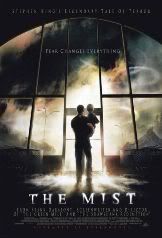
Frank Darabont has become something of the go-to guy when it comes to brining Stephen King to the big screen. His previous two efforts, The Shawshank Redemption and The Green Mile, were critical and box office successes in which he showed an innate understanding of the source material. In The Mist, based on the much-revered novella by Stephen King from his Skeleton Crew collection, he brings that same grasp of the complexities of ordinary humans reacting to the extraordinary that King has brought to his blood-soaked pages for years now. It’s the original The Fog meets Jurassic Park steeped in some serious post-9/11 commentary on blind faith and the search for answers in times of uncommon fear and uncertainty.

Thomas Jane headlines as David Drayton, movie poster artist and devoted husband and father, who ventures into town with son Billy (the remarkable little Nathan Gamble) and curmudgeonly neighbor Brent Norton (Andre Brauer) after a fierce New England storm sends a tree through his art studio and crushes Norton’s car. While at the local supermarket, a local townsman (character actor Jeffrey DeMunn) comes running in, bloodied and breathless, with warnings about something “in the mist”. Within seconds, the titular fogbank engulfs the supermarket, stranding several dozen shoppers. Over the course of several well-executed scenes, it becomes apparent that the strange mist holds unimaginable horrors. The trapped turn to, and on, each other in their fear and increasing insecurity.

Darabont’s pacing is spot-on, with spectacular sequences of action and horror interspersed between engaging scenes of character development and human drama. Aided by the tag team efforts of Ronn Schmidt’s moody cinematography and Hunter Via’s crisp editing, Darabont’s script comes to pulse-pounding life on the screen as few horror films in recent memory have. Darabont has an effective way of bringing out the nuances of King’s written works in his screen adaptations, raising appreciation for the source material considerably in the process. In The Mist, he once again proves that he “gets it”, that the horrors lurking just under the surface of those we meet walking down Main Street USA (in this case, the local supermarket) are often more horrifying than the monsters we conjure in the darkest places of our minds.

The ensemble cast is exceptional. Jane, who brings just the right balance to his action hero and devoted father role, is every bit the leading man here and probably the most convincing parent-protector since Dee Wallace in the film adaptation of King’s Cujo. Audiences feel his heartbreak as he struggles to assuage his son’s fears in the face of mounting hopelessness. The sorely underrated British actor Toby Jones (from The Painted Veil, Finding Neverland, and that other Capote movie) turns yeoman’s work as kindly store employee Ollie into a memorably sympathetic and heroic character, while Frances Sternhagen, no stranger herself to King adaptations with her role in 1990’s Misery, is a bonafide scene-stealer here as the feisty, grandmotherly Irene. Silent Hill’s Laurie Holden and American Pie’s Chris Owen show promise as well, while Brauer does his best with his clichéd role as the “heavy”. Nods also go out to William Sadler and DeMunn who prove why character actors are so important to American cinema. It’s Marcia Gay Harden, however, who is the standout here. As the more than slightly left-of-center religious zealot Mrs. Carmody, Harden is mesmerizing to watch as she skillfully develops the character from sideline joke to minor annoyance to legitimate threat. She embodies every facet of religious fanaticism to perfection, and her performance eerily conveys the dangers of blind faith in desperate times. In the hands of a lesser actress, Carmody could have come across as pure parody but Harden nails it, taking Carmody to dramatic heights without going over the top.

King purists may find something to gripe about by way of the film’s ending, which varies significantly from the source material. Bleak and ironic to the point of absurdity, it’s both a scarlet letter on Darabont’s chest and forgivable given the near-perfection of the two hours that precede it. Hopefully, in this age of vapid remakes and the depressing lack of originality exemplified by films like Hostel and the glut of torture porn masquerading as horror it spawned, fans will forgive his transgression and realize The Mist for the red-bowed love letter to horror aficionados that it is.

Sunday, December 9, 2007

Movie Review: The Invasion

The endless advance buzz about films that is leaked, intentionally or otherwise, from and by movie studios is as virulent as the alien infection in Warner Brother’s The Invasion. Without fail, behind-the-scenes tales of rewrites, re-shoots, and re-tooling in the editing room make their way like gestating germs into the collective consciousness, tainting the tableau before the canvas has dried. Critics and audiences alike have become like mindless pod people, led by this barrage of pre-release publicity to its pre-determined conclusion. Minds are made up on the merits of backstage hearsay, and movies are panned before they’re even seen. Expectations are a dangerous thing; water cooler conversation amongst film critics even more so.

In this third retread of the 1956 sci-fi classic Invasion of the Body Snatchers (based on Jack Finney’s 1955 novel The Body Snatchers), critics and audiences will likely be caught up in the backstage brouhaha that had director Oliver Hirschbiegel’s original cut deemed “too cerebral” for studio execs, the much-ballyhooed Wachowski brothers of Matrix fame being brought in for eleventh-hour rewrites, and up-and-coming action director James McTeigue (V for Vendetta) adding extra action sequences to the mix. What they’ll likely miss is an effective update on this classic allegorical tale about the dangers of conformity and the paranoia of multi-culturalism.

Nicole Kidman headlines as Dr. Carol Bennell, a Washington D.C. psychiatrist for whom the science of psychiatry has been replaced by the mindlessness of polypharmacy. (In early scenes, Hirschbiegel nicely foreshadows the personality-robbing alien invasion to come with modern psychiatry’s pharmaceutical over-reliance.) When a mysterious space shuttle crash brings with it an alien microbe, it isn’t long before the good people of our nation’s capitol morph into expressionless, emotionless shells of their former selves. When Kidman’s ex-husband (British actor Jeremy Northam of The Tudors) goes pod person early on, weekend visitation takes on an entirely new meaning for her young son Oliver (played well by newcomer Jackson Bond), and it’s up to Kidman and physician pal Ben Driscoll (played here as the archetype stalwart British hero by the yummy Daniel Craig of newfound James Bond fame) to save him before the city is locked down to contain the infection.

There is much here that we’ve seen before in the previous triumvirate of Body Snatcher films: fooling the pod people by dumbing down emotions, sleep as the conduit for transformation, the idea that the human race is fucking up the planet with its own humanity. Updated to reflect modern-day fears is the idea of the alien invasion coming in the form of a virus versus plant spore, effectively embodying our societal fears of pandemic by chemical warfare or avian flu. There are also some pretty obvious late-to-the-party nods to AIDS here, with infection spread through bodily fluids (Coffee, anyone?). Even fears over a country seemingly without borders gets a nod here with the idea that (illegal) aliens walk among us.

Acting is solid with Kidman and Craig making a capable on-screen pairing. As original Invasion of the Body Snatchers star Kevin McCarthy popped up in the 1978 remake in a clever wink to fans of the original, so too does genre veteran Veronica Cartwright from Philip Kaufman’s version. Cartwright again proves that she can make the most of yeoman’s work with a chilling and effective turn as one of Kidman’s troubled patients – a glorified cameo in the hands of a lesser actress. Fairing less well is veteran stage actor Jeffrey Wright (Angels in America) whose talent is admittedly wasted in a one-dimensional “science guy” role.

While the latest Invasion incarnation falls well short of Kaufman’s chilling ’78 retelling, it compliments Abel Ferrara’s ‘93 version with its ability to effectively update a now-classic premise. Summer blockbuster? Hardly. Still, the Hirschbiegel/Wachowski/McTiegue hybrid is nothing to dismiss. Slick, well-paced, and not nearly as disjointed a vision as the chorus of pre-publicity zombies would have one believe, The Invasion is an enjoyable Saturday matinee that adds just enough twist without bending a classic out of shape.