Pages

Showing posts with label film theory. Show all posts

Saturday, September 6, 2008

The Trouble with Horror Movies Today

Modern horror movies have lost their innocence. Sounds like an oxymoron, but it’s true. Gone are the days of wide-eyed awe at creatures that defied explanation and dazzled with their improbability, monsters that sprung forth from our internalized fears onto the screen. The modern horror film is less thematic and more about…well, everyday horror.

Trouble is that genre films today are more focused on the depiction of horror where horror films past concentrated on the personification of horror. Horror once spoke subtly, using allegory and metaphor and symbolism to convey the horror at its core. Horror spoke to you through the back door; it whispered in your ear. Headlines of the day were cloaked in comforting doses of filmmakers’ imagination—monsters and make-believe terrors. You escaped with horror to indirectly deal with broader societal issues that terrified or confused you—communism, war, racism, sexual liberation.

With its propensity for horror that’s ripped from the headlines, the genre now clobbers viewers over the head with the same reality they’re trying to escape. Home invasions, torture abroad, organ harvesters. There's little symbolism, little metaphor, little allegory. It’s all on full, graphic display, and there is no escape. Horror films today force us to confront visceral depictions of the stories we hear on the evening news. Our reality is met with reality masquerading as escapism on the screen. As a result, the horror movie experience is less cathartic, less therapeutic. It reinforces instead of relieves our fears. It's less roller coaster, more carousel.

Perhaps we’ve become too sophisticated for the simple cinematic metaphor, too jaded to buy into the personification of evil, too numb to bloodshed and violence. We know what evil is—we’re inundated with its images and affects 24/7 on streaming newscasts. There seems to be so little that shocks us that the boundaries in modern horror cinema have been stretched to their outer limits. And now that the concept of community is a fading aspect of our culture, there are few collective fears. Tapping into individual fears is a taller order for filmmakers, so they opt for depiction over personification. Moviemakers cop out and recycle ideas instead of creating the next creature from a black lagoon or the next thing from another world. Studios opt for remakes that spit in the eyes of the source material and reimaginings that have less to do with actual imagination and more to do with wringing as many dollars from old ideas with as little effort or artistry as possible. The fun has been zapped from modern horror movies, and we’re often left to suffer through joyless celluloid creations that lack passion for the horror at their core—slick eye candy possessing all the substance of a vacuous blond sipping cosmos at a bar. There are exceptions, of course, but those are few and far between the dreck.

Even the horror movie experience itself has changed drastically. With the fading of community, the collective viewing experience of Saturday afternoon matinees is on the decline. People opt for the comfort and sanctuary of their own home theaters and the resulting experience is heavily dulled down. No longer is there that marvelous shared fear, tension, and anxiety of a hundred people all simultaneously tensing and cowering and jumping and screaming in a crowded movie theater. The enchantment of greasy popcorn and musty theater seats is quickly approaching antiquation as studios contemplate ways to make quicker, bigger bucks by releasing films simultaneously to multiplexes and home viewing markets. We’re developing cultural immunity to our once beloved horror movie experience.

Worse, we’ve created a generation numb to horror films. Their reactions alone—laughter, mockery, derision—bespeak the failure of the modern genre film. Imagination in our young has been replaced by the instantly gratifying images of interactive video games and other high-tech fare that spell it all out on high-definition monitors. There are no spooky walks through the woods, no backyard sleep-outs, no summer camp rites of passage to tantalize and tickle those dark spots in our subconscious. Folklore that once fueled imagination is on the decline, with yarns about Bigfoot and the Loch Ness Monster and the Bermuda Triangle reduced to tabloid fodder and ridicule from even the youngest of minds. Campfire tales and urban legends have been replaced by sensationalized newscasts. In our scientific world, everything has a rational explanation and there’s little room left for the possibility of things unknown to us. We’re arrogant in our knowledge as a society, and the simplicity of horror cinema has suffered. Sometimes ignorance is bliss—at least when it comes to our horror movies.


Note: This essay originally appeared as part of a group article by the League of Tana Tea Drinkers at Blogcritics Magazine.

Sunday, June 1, 2008

John Carpenter's Horror Paradigm

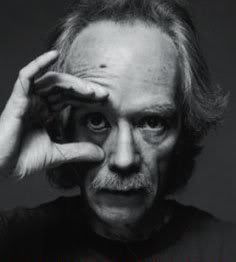
Fangoria is running a two-part interview with cinematic horror maestro John Carpenter, famed genre director of such iconic classics as Halloween, The Fog, Escape from New York, and The Thing. In these early films, he mastered the elements of mood and atmosphere and created genuine tension in the stories he was telling. Sadly, he seemed to hit a creative peak with The Thing that he’d never fully recapture – although he’d come close with 1998’s Vampires. His low point was his 2006 contribution to the second season of Showtime’s Masters of Horror series – an abysmal, downright silly exercise in politicized horror called “Pro-Life.”

In the second part of the two-part interview conducted by Alexandra Nakelski, Carpenter asserts that there are two types of horror stories to be told:

“There are two horror stories that we can tell, and we can imagine ourselves around the campfire listening to the tribal elder or witch doctor or preacher or whoever it is telling us these things at night. The first thing he tells us is about where ‘evil’ is, and he says, ‘Evil is out there,’ and he points beyond the campfire, to the darkness in the woods and the noises we hear at night; the wolves that come and drag us off; those beasts out there; the ‘other’ - the other tribe, the other people - the ones who are different, different color, their eyes are different from ours; those are the evil ones out there. In different countries they have different clothes, different ideologies, or they may be any force of nature we cannot control, so this unifies the tribe.

That’s the first story of horror. The second one is the same setup, but the tribal elder says, ‘Let me tell you where the evil is - the evil is here,’ and he points to himself. And he says, ‘It’s in the human heart.’ That’s a harder story to tell - that we are all part evil, monsters and devils - because the audience is always going to respond to the ‘other.’ It unifies us as a tribe - that’s the way we are designed. We see things in order to find where the predator comes from; it’s survival instinct over all the time we have evolved. So a lot of this is unconscious in a way. We’re driven by it, and our parents reinforce it, our religion reinforces it – ‘Watch out!’ Watch out for those predators, because they are all around.”

In Carpenter’s internal versus external paradigm, he uses Moby Dick as an example of purely external horror – a force of nature that is not us and over which we have no control. One could add to that list with The Birds or Alien or The Blob or any of the myriad giant insect movies from the 50’s. These are pure survival stories, us versus them. The external evil in this type of horror is seen as a unifying force, both onscreen and off.

According to Carpenter, the second type of horror – the internalized evil – is harder to pull off. Here he uses vampires, zombies, and werewolves - even Jekyll & Hyde – to illustrate the monster in us all. Arguably, it’s not the human origin of these evils that unsettles in these examples but rather the manifestation of the internalized evil that audiences respond to. Our fear response doesn’t come from the fact that the decaying zombie chowing down on our mother used to be our father – it comes from the fact that the dead have risen up from their graves. There is a detachment here when human crosses over to inhuman. “We” become a “them” and the horror shifts back to external.

In Carpenter’s own work, the closest he came to realizing the internal evil of man was in The Thing during which the crew of the Antarctic research station begins to turn on each other until individual self-preservation and collective paranoia collide. Still, their motivation was less an intrinsic evil and more a response to external stressors – in this case, an invasive alien life force.


But what about Halloween? Surely, Michael Myers was the product of internal malevolence? But no, not really. Carpenter renders Myers the pure personification of evil, so much so that the character is stripped of his humanity and becomes a faceless, emotionless killing machine from which the audience detaches itself. Rob Zombie probably came closer in last year’s Halloween reimagining, in which he added significant back story to the Michael Myers mythos and demystified the iconic, nebulous evil. By allowing audiences a glimpse of Michael as a boy, one whose white trash upbringing proves the fatal ingredient when combined with the boy’s malformed hardwiring, we see the possibility of what follows. Interestingly, it’s Zombie’s deconstruction of Myers’ unadulterated evil that had detractors screaming. Why? Following Carpenter’s logic, it’s because we’ve been trained to search everywhere but inside for the source of evil. We unify and look to the “other” to explain the inexplicable. We like our horror at arm’s length; it touches too close to home otherwise.

So what filmmakers and writers come close to telling Carpenter’s second kind of horror story – the evil of the human heart? For my part, I’d say author Jack Ketchum comes closest. He unnerves with stories of real people who do bad things. Really bad things. And he doesn’t couch the horror in campfire tales or urban legends, doesn’t disguise the inhumanity at the heart of his stories behind masks and creatures. The Girl Next Door, Red, The Lost, Right to Life - stories about real people with some seriously bad internal hardwiring. Ketchum’s work succeeds in meetings Carpenter’s criteria for this second kind of horror story because there is nothing else for the audience to respond to but what Ketchum strips bare and puts before them – the evil of the human heart.

What is your favorite John Carpenter film?
Assault on Precinct 13
Halloween
The Fog
Escape from New York
The Thing
Christine
Prince of Darkness
They Live
Village of the Damned
Vampires
Ghosts of Mars