Pages

Wednesday, June 18, 2008

All Around the World (or Blogging Bits)

Like the Lisa Stansfield song, I’ve been all around the (blogging) world and I…I…I…(cue obligatory Jamie Lee Curtis photo):

My fellow horror bloggers from the League of Tana Tea Drinkers have an excellent roundtable exploration of evil children in horror up at BlogCritics. Jump in and join the discussion.

Fathers figured heavily into the blogging week as Father’s Day was celebrated. Comic-themed
Horrors of It All paid special tribute to Dads everywhere with a look back at artist Bernie Wrightson’s comic version of the Creepshow vignette "Father’s Day" from the July 1982 graphic novel adaptation of the pre-code horror-inspired George Romero-directed, Stephen King-penned film. Hosts Unkle Lancifer and Aunt John over at Kindertrauma presented their picks for Trauma-daddies, stamping those father figures in horror with seals of approval or disapproval. Finally, Carnaki over at The Mystery of the Haunted Vampire posted a poignant Father’s Day tribute to his own Dad and shared some thoughts on responsible fatherhood, proving that sometimes it’s not all about the horror.

Speaking of critics, they haven’t been kind to M. Night Shyamalan’s The Happening, which
I weighed in myself on this past Sunday. Check out some of the other LOTT D reviews at Horror’s Not Dead and Vault of Horror.

Some other highlights from the horror blogging community that caught my eye:

Monday, June 16, 2008

I Can Say I Knew Him When...

I’m delighted for my friend and frequent collaborator Chad Helder who has signed on as lead writer and script editor for not one, but two(!), new comic book series from Bluewater Productions.

From the official press release…

“The legacy of legendary horror film actor Vincent Price will soon stalk the comic aisle.

Bluewater Productions, Inc. has entered into an agreement with the estate of film icon Vincent Price to produce a new monthly comic book series titled, 'Vincent Price Presents.' The series will feature the iconic Price in a myriad of roles including host, muse, background player, and protagonist.

The on-going series will showcase classic gothic horror elements, but will also include themes from Price’s past work in the mystery and suspense genres.

Price’s daughter, designer Victoria Price, was instrumental in brokering the historic deal. This is the first time her father’s name and likeness will appear in a licensed comic book series.

Victoria Price explains the motivation behind the collaboration: 'I’m really touched and excited about the series because it will help energize my father’s legacy for a new generation. We’re planning a big celebration for his 100th birthday in 2010, and this comic series fits into those plans perfectly.'

Bluewater is predominately known for the 'Ray Harryhausen Presents' titles based on the Sinbad franchise and the '10th MUSE' series of comic books and graphic novels. It has recently added the horror genre to its repertoire.

'After the success with the Ray Harryhausen comics, we wanted to work with another film legend. Vincent Price was always at the top of everyone's short list,' said Bluewater President Darren Davis. 'We find his body of work and presence on film to be really inspirational, so we wanted to recreate his legacy for a new generation of comic book readers. Not only are we developing sequels to his specific films, we are also developing gothic horror stories in the spirit of his legacy.'

The 'Vincent Price Presents' series will launch this fall in conjunction with another new horror series from Bluewater. 'Bartholomew of the Scissors' will feature gothic horror elements with innovative twists. Similar to the 'Vincent Price Presents' series, the primary focus is on good storytelling technique as opposed to gratuitous gore. Writer Chad Helder and artist Daniel Crosier have given the series a unique voice and a distinctive organic look.

The first issues of 'Vincent Price Presents' and 'Bartholomew of the Scissors' will be released in October to coincide with Halloween festivities.”

I first became acquainted with Chad when he took a shine to The Literary Six and offered this fledgling scribe a home at his outstanding Unspeakable Horror site, the actual birthplace of Slasher Speak. Since then we’ve forged a friendship that’s included a short story collaboration (that’s in the process of being shopped around literary town) and an anthology of queer horror tales that we co-edited. Chad was one of the first folks to extend his virtual hand in friendship to me two years ago, and I’m just thrilled for his success!

For more information on Chad’s forthcoming comic book series (x2!), check out the Bluewater Productions website. There's also an interesting article about the new Vincent Price series at Newsarama.

Sunday, June 15, 2008

Movie Review: The Happening

Poor M. Night Shyamalan. Talk about losing one’s mojo. Following his career has been like watching a helium balloon slowly deflate. Sitting through The Happening, it’s almost impossible to believe that this film is the work of the same man who once brought us The Sixth Sense and Signs.In terms of an obligatory recap (spoilers ahead), The Happening is about an airborne toxin of botanical origin that first sweeps through big city parks, causing disorientation, confused speech, momentary paralysis, and, finally, an immediate mass suicide prompt. The toxin quickly spreads from the most densely populated areas to the outlying secondary most populated areas and on down – at first giving the hopeful impression that our background landscape has developed an actual plan of destruction. It’s an almost-intriguing concept that Shyamalan teases us with but never fully commits to.

Trying to stay one step ahead of the ominous sometimes breeze/sometimes wind that carries the plant toxin is the requisite ragtag bunch of survivor hopefuls that include science teacher Elliot Moore (Mark Wahlberg, whose own acting career proves that Shyamalan isn’t the only one not living up to earlier promises), his almost-adulterous wife Alma (Zooey Deschanel), and his fellow teacher and best friend Julian (John Leguizamo) and his daughter Jess (Ashlyn Sanchez). Along the way, Julian opts out to go find his incommunicado wife in New Jersey, leaving Elliot and Alma to assume parenting duties to little Jess as they pick up a hot-dog-loving, cross-eyed nursery owner (Frank Collison) and his wife (Victoria Clark), the mandatory military presence (Jeremy Strong), two teenage boys (Spencer Breslin, older brother of Abigail, and Robert Bailey, Jr.), and a small group of indistinguishable fellow survivors who are easily identified as fodder for the plant toxin.

Even though no one really knows what’s going on and the group’s actions are pure piecemeal speculation, apparently only Elliot and Alma really know how best to dodge the wind – or they have some inexplicable immunity. In just one of the gaping holes in the logic that plagues the film, we’re never really sure which or why. Soon everyone but the Moore’s and their young charge succumb, and the surviving trio find themselves holed up in the ramshackle country home of the deliriously deranged Mrs. Jones (Betty Buckley) whose paranoia and distrust of the outside world soon prove more dangerous than the insidious plant spores blowing around outside.

But as quickly as the wind starts blowing, it suddenly stops. What follows is the requisite disaster movie-esque happy ending involving a home pregnancy test tempered by the obligatory ominous warning about the events of the titular event being a warning against planetary abuse courtesy of a talking head on a background TV (watch for the odd, thinly-veiled reference to 9/11). Flash forward a bit to the predictable Paris-set “here it goes again” ending. Roll credits. Scratch your head.

As a screenwriter, Shyamalan tanks here with a script that’s devoid of all tension and mystery, leaving the film’s genre classification as an eco-thriller stretching the limits of credibility. The dialogue is so downright laughable and improbable in parts that one almost excuses the poor performances (see below). As a director, there are glimpses of his former greatness sprinkled in between the inanity that show Shyamalan knows how to skillfully set up a scene. There are a handful of effective moments here, most notably in the opening New York City attack, in a subsequent scene where an outbound Philadelphia passenger train comes to a stop in the middle of small town Pennsylvania and the passengers gather outside, and in a scene during which various survivors arrive at the center of a literal crossroads with stories of what they’ve just come from that’s vaguely reminiscent of John Carpenter’s The Fog where survivors converge upon the old church.

Thankfully, Shyamalan knows a thing or two about how to partner with those who can help ratchet up the actual production a bit – here best exemplified by James Newton Howard’s effective musical score and Tak Fuijimoto’s striking cinematography. Conversely, he seems to turn a blind eye to the acting in The Happening, coaxing abysmal lead performances out of Wahlberg and the ludicrously wide-eyed Deschanel while relegating the far superior Leguizamo and Buckley (who lends more creepiness to the film in her mere ten minutes of screen time than Shyamalan can pull off in the other eighty minutes combined) to yeoman’s work. Little Sanchez is no Dakota Fanning or Abigail Breslin either, possessing little of the charisma or endearing kiddie charm required to make us feel anything but indifference toward her character. Blink and you’ll miss the cameo by Alan Ruck (here playing the Principal of the school where Wahlberg and Leguizamo teach), a wonderful and sorely underrated character actor perhaps best known as sidekick to Matthew Broderick’s titular character from 1986’s Ferris Bueller’s Day Off and his work on TV’s Spin City.

Shyamalan critics seemingly fall into two camps: the ones who wrote him off after The Village and the ones who’ve stayed later at the dance hoping that he’d regain the momentum that began with The Sixth Sense. I fall squarely into the latter, being among the minority that actually enjoyed The Village and (to a slightly lesser degree) Lady in the Water. Sure I saw the flaws and could understand the frustration, although perhaps not to the degree or the fervor with which he was decried by detractors. Sometimes hype is the worst enemy of a newbie and fair-haired children fall the hardest. But I also understood The Sixth Sense as Shyamalan’s premature ejaculation, understanding that it would take awhile to coax another cinematic erection. Sadly, The Happening will be a non-event, a flaccid addition to Shyamalan’s shrinking credibility as a Hollywood triple threat.

Happy Father's Day!

Through good and bad...
there's always Dad.

Happy Father's Day!

x/o
Vince

Sunday, June 1, 2008

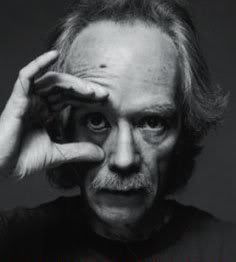
John Carpenter's Horror Paradigm

Fangoria is running a two-part interview with cinematic horror maestro John Carpenter, famed genre director of such iconic classics as Halloween, The Fog, Escape from New York, and The Thing. In these early films, he mastered the elements of mood and atmosphere and created genuine tension in the stories he was telling. Sadly, he seemed to hit a creative peak with The Thing that he’d never fully recapture – although he’d come close with 1998’s Vampires. His low point was his 2006 contribution to the second season of Showtime’s Masters of Horror series – an abysmal, downright silly exercise in politicized horror called “Pro-Life.”

In the second part of the two-part interview conducted by Alexandra Nakelski, Carpenter asserts that there are two types of horror stories to be told:

“There are two horror stories that we can tell, and we can imagine ourselves around the campfire listening to the tribal elder or witch doctor or preacher or whoever it is telling us these things at night. The first thing he tells us is about where ‘evil’ is, and he says, ‘Evil is out there,’ and he points beyond the campfire, to the darkness in the woods and the noises we hear at night; the wolves that come and drag us off; those beasts out there; the ‘other’ - the other tribe, the other people - the ones who are different, different color, their eyes are different from ours; those are the evil ones out there. In different countries they have different clothes, different ideologies, or they may be any force of nature we cannot control, so this unifies the tribe.

That’s the first story of horror. The second one is the same setup, but the tribal elder says, ‘Let me tell you where the evil is - the evil is here,’ and he points to himself. And he says, ‘It’s in the human heart.’ That’s a harder story to tell - that we are all part evil, monsters and devils - because the audience is always going to respond to the ‘other.’ It unifies us as a tribe - that’s the way we are designed. We see things in order to find where the predator comes from; it’s survival instinct over all the time we have evolved. So a lot of this is unconscious in a way. We’re driven by it, and our parents reinforce it, our religion reinforces it – ‘Watch out!’ Watch out for those predators, because they are all around.”

In Carpenter’s internal versus external paradigm, he uses Moby Dick as an example of purely external horror – a force of nature that is not us and over which we have no control. One could add to that list with The Birds or Alien or The Blob or any of the myriad giant insect movies from the 50’s. These are pure survival stories, us versus them. The external evil in this type of horror is seen as a unifying force, both onscreen and off.

According to Carpenter, the second type of horror – the internalized evil – is harder to pull off. Here he uses vampires, zombies, and werewolves - even Jekyll & Hyde – to illustrate the monster in us all. Arguably, it’s not the human origin of these evils that unsettles in these examples but rather the manifestation of the internalized evil that audiences respond to. Our fear response doesn’t come from the fact that the decaying zombie chowing down on our mother used to be our father – it comes from the fact that the dead have risen up from their graves. There is a detachment here when human crosses over to inhuman. “We” become a “them” and the horror shifts back to external.

In Carpenter’s own work, the closest he came to realizing the internal evil of man was in The Thing during which the crew of the Antarctic research station begins to turn on each other until individual self-preservation and collective paranoia collide. Still, their motivation was less an intrinsic evil and more a response to external stressors – in this case, an invasive alien life force.


But what about Halloween? Surely, Michael Myers was the product of internal malevolence? But no, not really. Carpenter renders Myers the pure personification of evil, so much so that the character is stripped of his humanity and becomes a faceless, emotionless killing machine from which the audience detaches itself. Rob Zombie probably came closer in last year’s Halloween reimagining, in which he added significant back story to the Michael Myers mythos and demystified the iconic, nebulous evil. By allowing audiences a glimpse of Michael as a boy, one whose white trash upbringing proves the fatal ingredient when combined with the boy’s malformed hardwiring, we see the possibility of what follows. Interestingly, it’s Zombie’s deconstruction of Myers’ unadulterated evil that had detractors screaming. Why? Following Carpenter’s logic, it’s because we’ve been trained to search everywhere but inside for the source of evil. We unify and look to the “other” to explain the inexplicable. We like our horror at arm’s length; it touches too close to home otherwise.

So what filmmakers and writers come close to telling Carpenter’s second kind of horror story – the evil of the human heart? For my part, I’d say author Jack Ketchum comes closest. He unnerves with stories of real people who do bad things. Really bad things. And he doesn’t couch the horror in campfire tales or urban legends, doesn’t disguise the inhumanity at the heart of his stories behind masks and creatures. The Girl Next Door, Red, The Lost, Right to Life - stories about real people with some seriously bad internal hardwiring. Ketchum’s work succeeds in meetings Carpenter’s criteria for this second kind of horror story because there is nothing else for the audience to respond to but what Ketchum strips bare and puts before them – the evil of the human heart.

What is your favorite John Carpenter film?
Assault on Precinct 13
Halloween
The Fog
Escape from New York
The Thing
Christine
Prince of Darkness
They Live
Village of the Damned
Vampires
Ghosts of Mars